
The World Business Council for Sustainable Development, as a founding partner of the Good Food Finance Network and Secretariat for the Forest Investor Club, has developed a set of case studies showcasing innovative investment strategies that are directing private capital toward sustainable food systems, forests, and nature. The five case studies– ranging from sustainable cocoa farming in Central America to zero-deforestation palm oil in Southeast Asia – show how the right investment strategies can transform the financing of food systems for a healthy, sustainable future.
Yearly Archives: 2023
Financial Markets Roadmap for Transforming the Global Food System
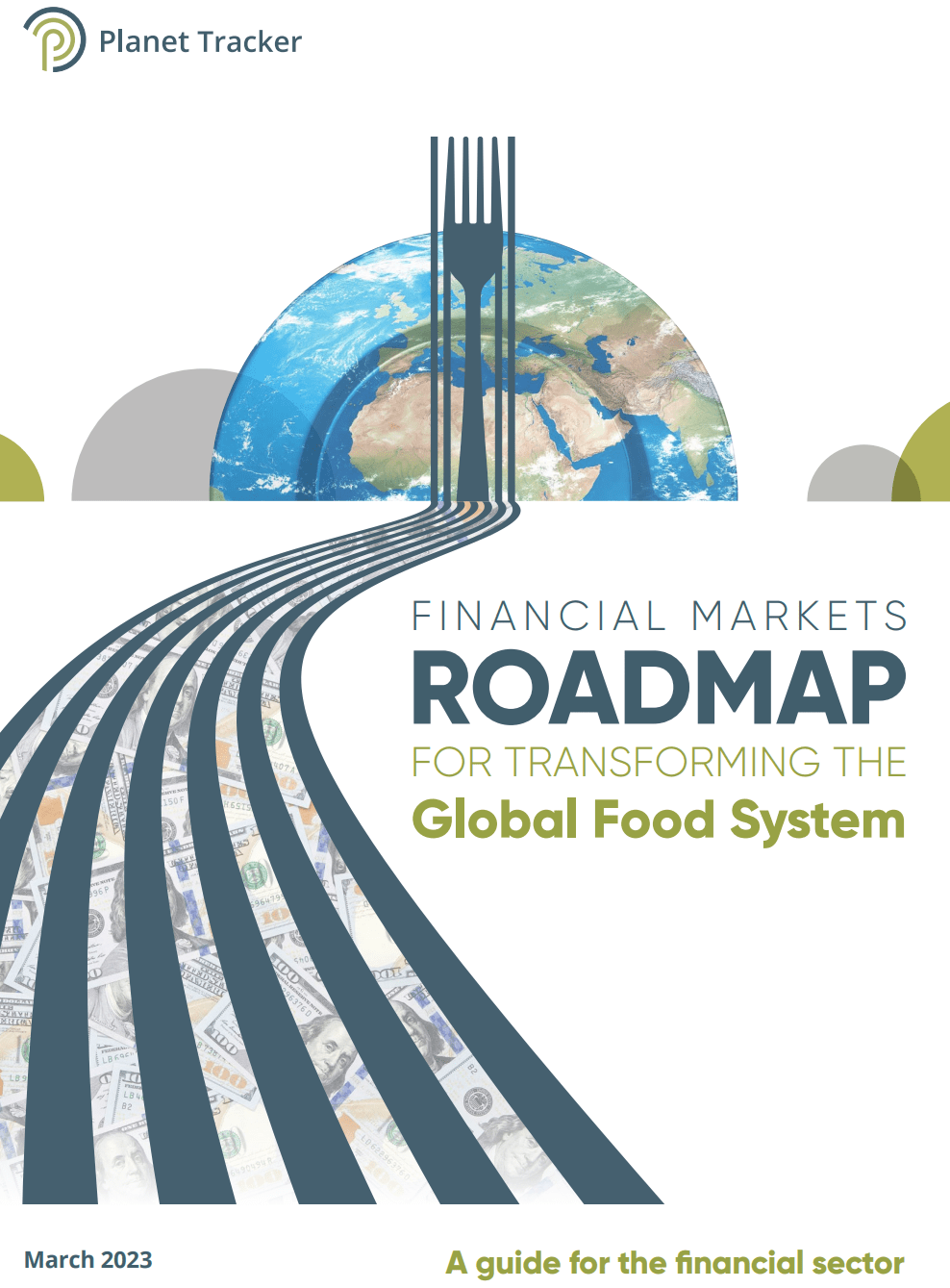
Planet Tracker’s report, ‘Financial Markets Roadmap for Transforming the Global Food System’ sets out clear steps for the financial community to achieve a sustainable food system by 2050
EAT-Lancet Commission 2.0: securing a just transition to healthy, environmentally sustainable diets for all

GFFN Founding Partner EAT Forum, in their EAT-Lancet’s 2.0 Commission, examines the latest evidence to define and quantify a healthy reference diet within the limits of our planet that is accessible to all – Read the full commentary
Five-year sprint to transform food-related finance data

In May, the Good Food Finance Network launched the Integrated Data Systems Initiative, as a 5-year innovation sprint linked to AIM for Climate Summit. The goal is to transform the way data systems inform financial decision-making—across the public, private, and multilateral sectors. Read more.
Good Food Finance Week Outcomes: Driving change in food systems finance

This blog outlines solutions identified during the Good Food Finance Week to achieve a food systems transformation, highlighting best approaches, current financial innovation, the opportunity for both private and public financiers, and the need for standardizing science-based thinking and reporting through all aspects of the value chain.
New UNEP Report Outlines Steps to Mobilize Good Food Finance, Highlighting Exemplary Targets

UNEP’s Driving Finance for Sustainable Food Systems report outlines a roadmap for financiers to drive significant capital flows towards sustainable food systems, identifies actions to develop an enabling policy environment to promote sustainable finance, and highlights good practices demonstrated and promoted by the Good Food Finance Network’s High Ambition Group.
Climate Metrics: measuring progress and catalyzing investment in sustainable food systems

This brief summarizes key trends in climate-related metrics used by financial institutions working in the sustainability of food systems and provides an overview of the current state of climate metrics.
Science and Data for Healthy, Sustainable & Equitable Outcomes, at the United Nations
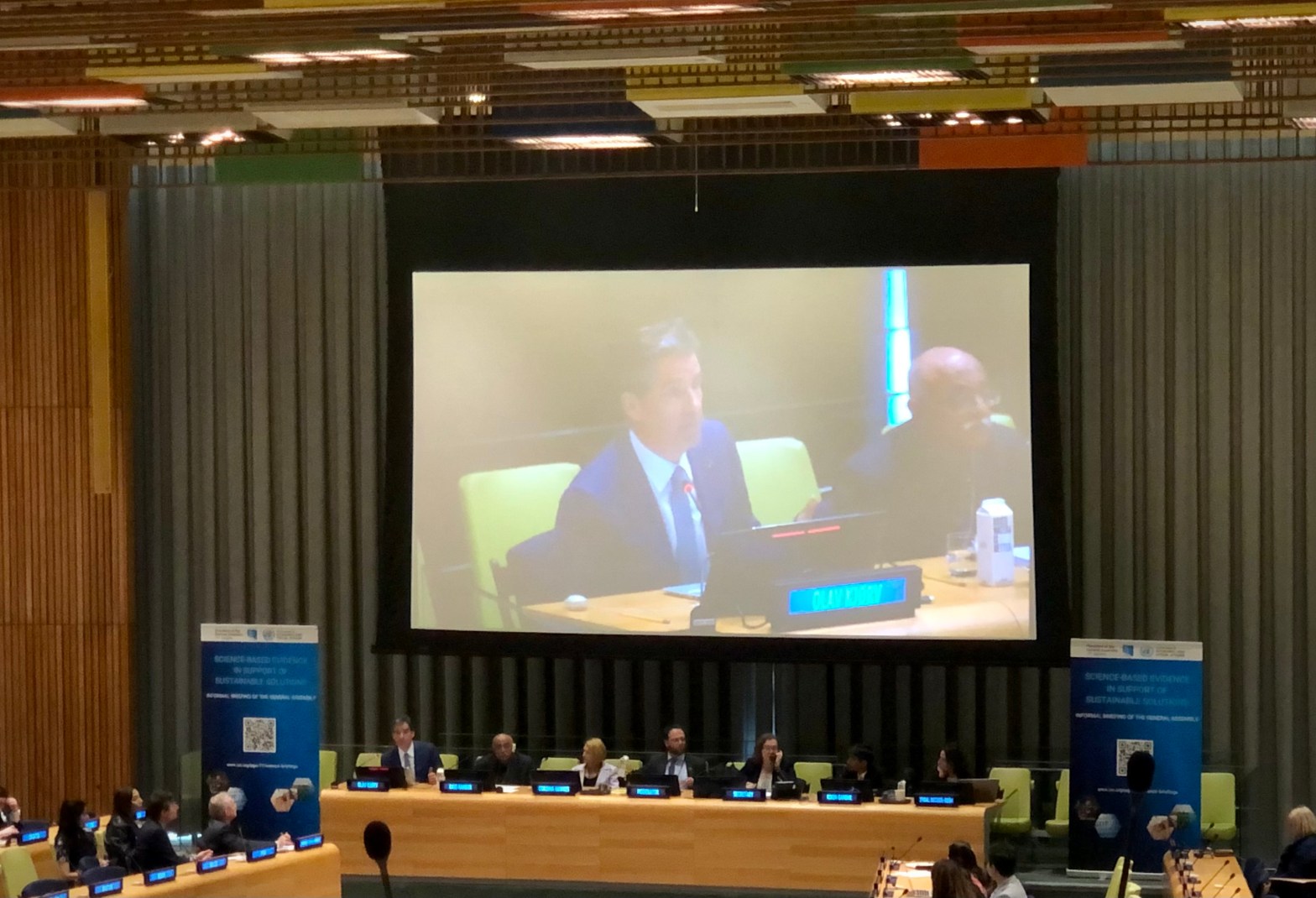
On Wednesday, April 12, the President of the General Assembly Csaba Kőrösi hosted a day-long Special Plenary Science Briefing for the General Assembly, in the Trusteeship Council Chamber at United Nations Headquarters in New York. The event was remarkable in part because the entire day was focused on one worthy, practical, and world-building goal: establishingContinue reading “Science and Data for Healthy, Sustainable & Equitable Outcomes, at the United Nations”
How to boost international private climate finance

This paper, published by Chatham House Policy Institute, explores the potentially critical role of central banks, financial regulators and finance industry coalitions in stimulating private cross-border climate-related investment flows – particularly into developing economies.
Article 6.8 of the Paris Agreement invites integrated data systems

To shift food-related finance to health-building, climate-smart and sustainable practices, investors and public sector decision-makers will need data. Decision-support data for finance that reduces harm and builds resilience, broadly, will need to qualify performance across multiple dimensions. Integrated metrics will be key to achieving an integrated and holistic investment transition. Article 6.8 of the ParisContinue reading “Article 6.8 of the Paris Agreement invites integrated data systems”
 Good Food Finance Network