
Food systems are one of the major drivers of Nature loss and climate disruption, in all regions of the world. Agricultural and land use practices developed in a time when the human population was much smaller, and our industrial resource-extraction capabilities were more modest, are now putting future food security itself at risk. Last month,Continue reading “EAT-Lancet Commission finds food systems can support human & planetary health”
Category Archives: Report
Guidelines & Recommendations for Halting Deforestation

Deforestation puts investors with portfolio exposure to forest-linked commodities—such as cocoa, beef, soy and palm oil—at financial risk from regulatory, market, and reputation-related shifts. This is because deforestation poses systemic economic risks as the second-largest source of annual greenhouse gas emissions, a threat to ecological tipping points, and a diminisher of carbon sinks. Asset ownersContinue reading “Guidelines & Recommendations for Halting Deforestation”
Agrifood transformation can secure a livable climate & ocean future

In its flagship Recipe for a Livable Planet report, the World Bank found that Agrifood is a bigger contributor to climate change than many think. It generates almost a third of GHG emissions, averaging around 16 gigatons annually. This is about one-sixth more than all of the world’s heat and electricity emissions. This has several far-reaching practicalContinue reading “Agrifood transformation can secure a livable climate & ocean future”
Innovative Collaborative Funding Model de-risks investments in good food transformation

By Hamid Hamirani, Senior Advisor FSF and Managing Principal EHA Advisory Innovative Collaborative Funding Model: De-Risking Investing in the Good Food Transformation The Innovative Collaborative Funding Model (ICFM) is designed to address food security, improve nutritional outcomes, support adoption of climate smart agricultural practices, and enhance sovereign fiscal resilience. A new paper outlines the model, along withContinue reading “Innovative Collaborative Funding Model de-risks investments in good food transformation”
Transforming Agrifood Systems Amidst the Climate Crisis: A Diversity of Solutions for People, Planet, and Prosperity

The report aims to inform, enable, and mobilize a broad spectrum of policymakers, private asset managers and owners, and corporate leaders through a journey that leads towards agrifood systems transformation with equitable health, climate, and financial benefits for all.
Financing the good food transformation to promote fiscal resilience, addressing food security, human and planetary health

This research compiles compelling evidence of the fiscal burden on governments from unhealthy food systems. Inaction threatens stability through inflation, food insecurity, degraded land, and climate impacts. However, strategic public financing and innovative collaborative investment models can fund a just transition that benefits all.
The State of Food Security and Nutrition in the World 2023
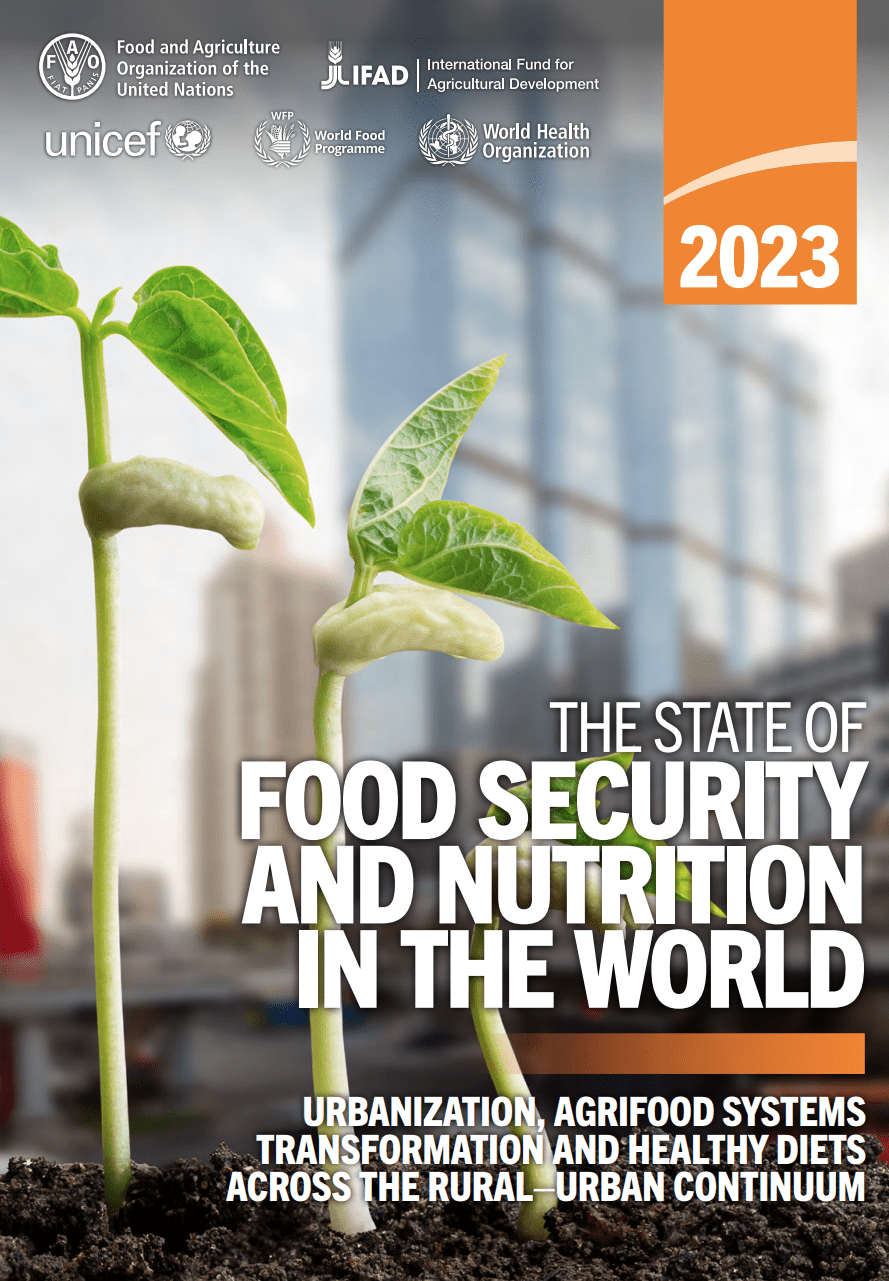
This annual FAO report provides an update on global progress towards the targets of ending hunger (SDG Target 2.1) and all forms of malnutrition (SDG Target 2.2) and estimates on the number of people who are unable to afford a healthy diet.
Integrating a human rights-based approach in European development finance institutions

This paper aims to outline human rights-based approaches for IFIs and DFIs, highlight good practices, and discuss some of the challenges linked to their operationalisation. Read more now!
Fast and Furious: The Rise of Environmental Impact Reporting in Food Systems

Explore trends, drivers, impacts and potential pitfalls, as well as the many open research and policy questions relating to environmental impact reporting
Guidance for Financial Institutions on the Global Biodiversity Framework (GBF)

GFFN’s supporting partner, UN Environment Programme Finance Initiative (UNEP-FI), has released a series of publications that offer guidance to banks, investors and other financial institutions for recommendations and actions to align with the GBF.
 Good Food Finance Network