
In 2023, the United Nations General Assembly formally asked the International Court of Justice (ICJ) to issue an advisory opinion on the obligations of states with regard to climate change, under international law. The request asked for legal findings on two core questions: On Wednesday, July 23, 2025, the ICJ issued its landmark Advisory Opinion on theContinue reading “ICJ climate opinion has implications for food finance”
Tag Archives: climate
City food finance principles to build Climate Value

Cities are increasingly important in the work of shaping human access to health and wellbeing. As more of the world’s population moves to cities, decisions that determine whether air and water are clean and safe, and how food is acquired and distributed in local economies, may determine how long people live and how free theyContinue reading “City food finance principles to build Climate Value”
Belém is an opportunity to avoid costly economic breakdown

The COP30 round of UN Climate Change negotiations in Belém, Brazil, offers many opportunities for expanding investment into climate action and its everyday benefits. In many ways, Belém provides a unique opportunity to take those benefits far beyond clmate priorities, to support improved conditions across whole economies. For a long time, one of the greatContinue reading “Belém is an opportunity to avoid costly economic breakdown”
Cooperative innovation in energy, food, finance & trade can halt climate breakdown

Ahead of the Spring Meetings of the World Bank and International Monetary Fund, CCI is calling for a significant increase in multilateral climate cooperation, in line with Article 6.8 of the Paris Agreement. 32 years have passed since the community of nations formally agreed to “prevent dangerous anthropogenic interference with the climate system”. Since the Paris AgreementContinue reading “Cooperative innovation in energy, food, finance & trade can halt climate breakdown”
Transforming Agrifood Systems Amidst the Climate Crisis: A Diversity of Solutions for People, Planet, and Prosperity

The report aims to inform, enable, and mobilize a broad spectrum of policymakers, private asset managers and owners, and corporate leaders through a journey that leads towards agrifood systems transformation with equitable health, climate, and financial benefits for all.
The future of finance is distributed, multiscale, and resilience-building

The future of finance will be less exploitative and better designed to generate sustainable value, inclusively. It will be distributed, multiscale, and resilience-building. We know this, because the raw math shows it must be so. Already the number of catastrophically costly events driven by climate destabilization has proliferated wildly. Most regions are now experiencing multiple overlapping major climateContinue reading “The future of finance is distributed, multiscale, and resilience-building”
Guidance for Financial Institutions on the Global Biodiversity Framework (GBF)

GFFN’s supporting partner, UN Environment Programme Finance Initiative (UNEP-FI), has released a series of publications that offer guidance to banks, investors and other financial institutions for recommendations and actions to align with the GBF.
Financial Markets Roadmap for Transforming the Global Food System
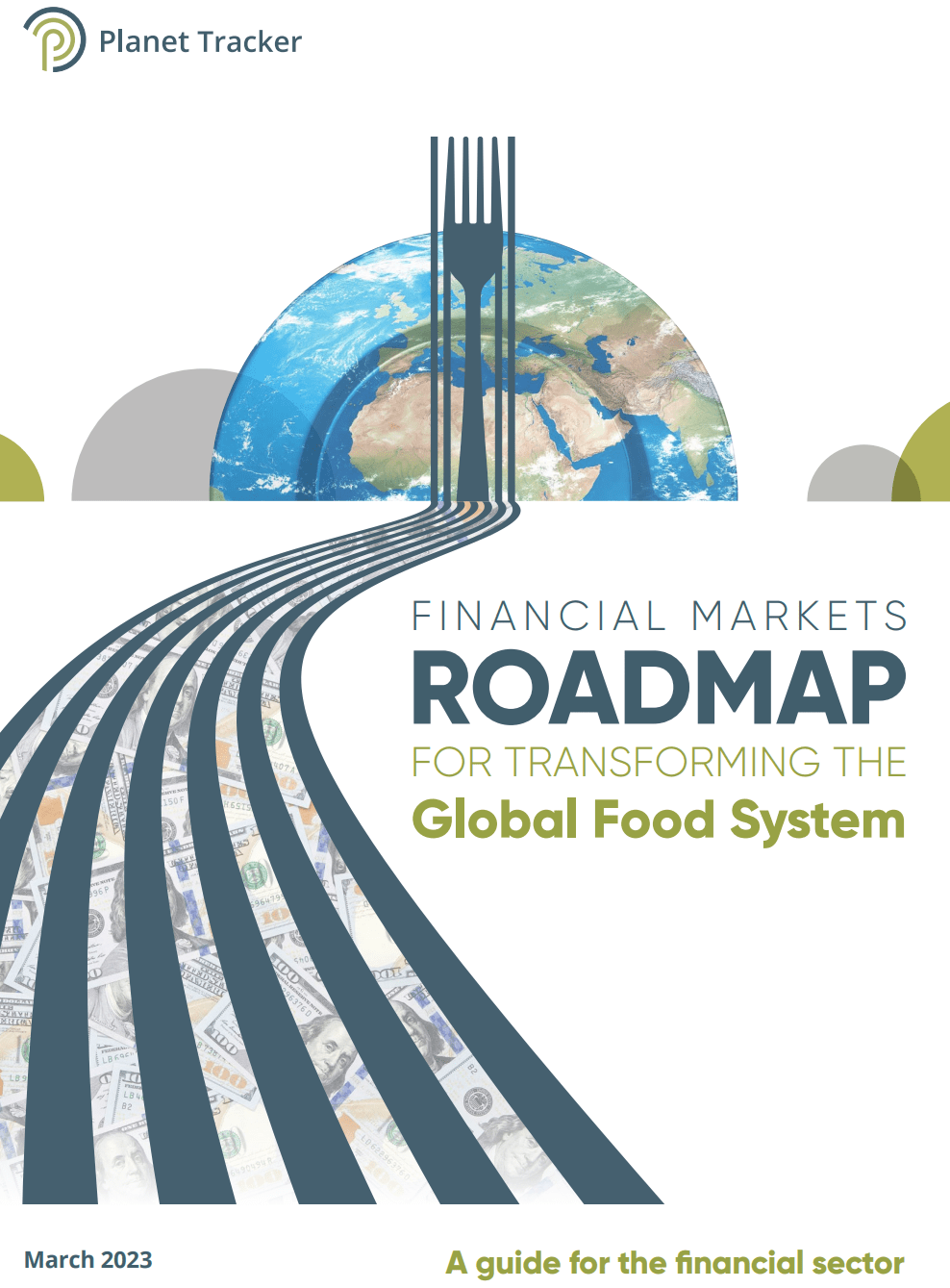
Planet Tracker’s report, ‘Financial Markets Roadmap for Transforming the Global Food System’ sets out clear steps for the financial community to achieve a sustainable food system by 2050
Good Food Finance Week Outcomes: Driving change in food systems finance

This blog outlines solutions identified during the Good Food Finance Week to achieve a food systems transformation, highlighting best approaches, current financial innovation, the opportunity for both private and public financiers, and the need for standardizing science-based thinking and reporting through all aspects of the value chain.
Climate Metrics: measuring progress and catalyzing investment in sustainable food systems

This brief summarizes key trends in climate-related metrics used by financial institutions working in the sustainability of food systems and provides an overview of the current state of climate metrics.
 Good Food Finance Network