
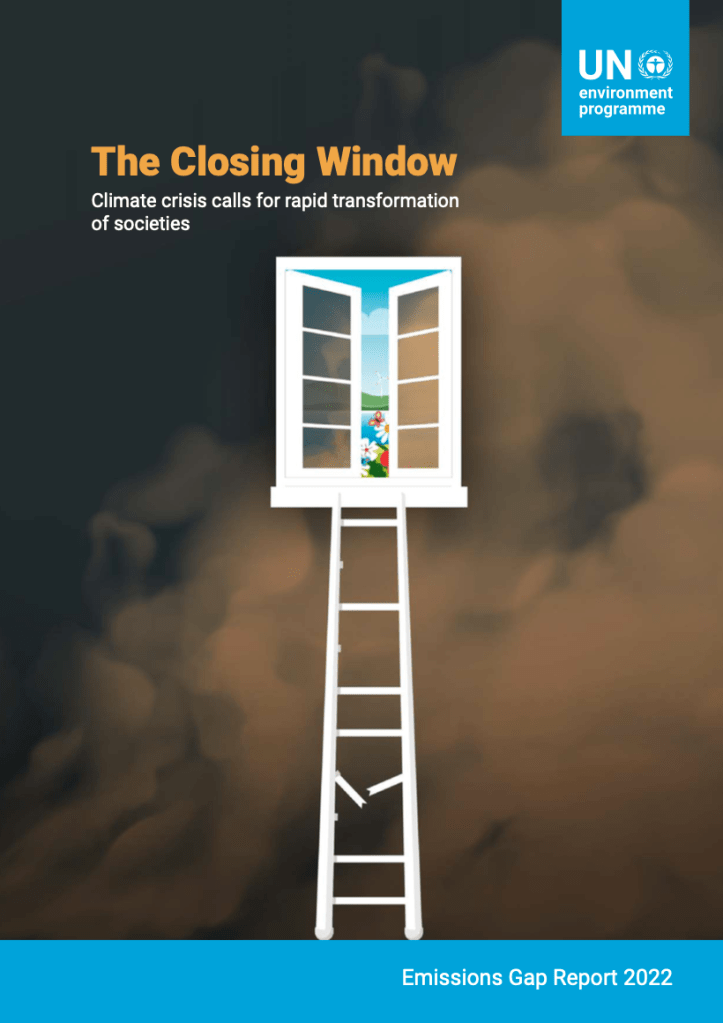
The 2022 Emissions Gap Report found no credible pathway to keep emissions below the 1.5-degree target; we are on track to warm by 2.8-degrees. The report identifies a range of transformation domains with several mitigation measures where food systems can contribute to bridge the emissions gap.
Transforming food systems is imperative for avoiding dangerous levels of climate change and other environmental problems. The report identifies a range of transformation domains with several mitigation measures where food systems can contribute to bridge the emissions gap, including:
- demand-side changes,
- protection of natural ecosystems,
- improvements in food production at the farm level, and
- decarbonizing the food supply chain.
Secretary-General on launch of the Emissions Gap Report 2022: read here
The report is the 13th edition in an annual series that provides an overview of the difference between where greenhouse emissions are predicted to be in 2030 and where they should be to avert the worst impacts of climate change.
 Good Food Finance Network