
Last month the Good Food Finance Network brought together key stakeholders and industry leaders to explore the intersection of finance and sustainable food systems, during the Good Food Finance Week (April 24-28).
Through dialogues on sustainable food systems as investable solutions, unblocking finance flows via the Co-Investment Platform, and the role of advocacy and mobilization, participants explored pathways to transform the future of food and agriculture. The event’s outcomes set the stage for continued efforts in building partnerships, scaling innovative solutions, and advocating for policies prioritizing sustainability and justice.
This blog outlines solutions identified during the Good Food Finance Week to achieve a food systems transformation, highlighting best approaches, current financial innovation, the opportunity for both private and public financiers, and the need for standardizing science-based thinking and reporting through all aspects of the value chain.
The time for action is now
Sessions during GFFW identified urgent actions and approaches needed by stakeholders throughout the value chain to overcome challenges in shifting capital flows to achieve a sustainable food system transition. H.E. Csaba Korosi, President of the 77th session of the UN General Assembly, emphasized,

“A holistic approach must correct systems inefficiencies and promote sustainable practices that benefit us. It must help redirect about 2 trillion dollars of capital towards healthier outcomes. This requires offering improved terms of lending, facilitating access to investments in sustainable technologies, derisk transactions through lending finance.”
H.E. Csaba Korosi, President of the 77th session of the UN General Assembly
Apart from social and environmental reasons, a sectoral transition toward sustainable food systems also makes economic sense. Prof. Dr. Hermann Lotze-Campen, Potsdam Institute for Climate Impact Research and Food Systems Economic Commissioner (FSEC), contributed insights from an FSEC cost-benefit analysis, outlining how “the costs of inaction outweigh the costs of action”. This analysis identified three key levers for change to generate a system transformation; 1-incentives 2-innovation and 3-public investment. The last one is particularly essential in relieving constraints to adapting to new incentives and making new opportunities accessible; and public support necessary for de-risking private sector transitions and innovation.
Financial Innovation for Shifting Capital Flows
As introduced by Prof. Dr. Hermann Lotze-Campen, Financial Innovation is a key aspect in overcoming challenges in shifting capital flows. As an example of innovations currently being developed, Dr. Gunhild Stordalen, Founder and Executive Chair at EAT; GFFN Principal, presented the GFFN’s Co-Investment Platform (CIP), a meta-innovation idea that will be an important part of the Paris moment for food in the making for UNFCCC COP28 UAE.

“The GFFN Co-Investment Platform will serve as a good food finance facility to facilitate co-investment partnerships and expand access to needed financing. The platform will support the design and deployment of financial strategies, instruments, tools that are aligned with what the science demands, and that will draw on ongoing work to integrate different data systems to provide multi-dimensional information to finance decision makers and allow for better performance tracking. Governments and private sector leaders will be able to count on the CIP to help them improve their ability to attract finance in support of the necessary policy shifts they will need to lead.”
Dr. Gunhild Stordalen, Founder and Executive Chair at EAT; GFFN Principal
The platform aims to facilitate co-investment partnerships and expand access to needed financing. It supports the design and deployment of funds and facilities through four work areas; managed funding, instrumentation, facilitating investment partnerships, and mutual accountability. By integrating different data systems, the platform provides multidimensional information to financial decision-makers, enabling better performance tracking. Strategies for better engaging private sector actors with the CIP, defining the investment case for public finance, and obtaining philanthropic funding were discussed during Good Food Finance Week workshops.
Private Finance and the Funding Gap
To achieve climate mitigation and adaptation targets, as well as other Sustainable Development Goals (SDGs), a substantial funding gap of $350 billion per year by 2030 exists in transforming food systems. Eric Usher, Head at UNEP FI and a Principal of the Good Food Finance Network, highlighted the potential for private finance to fill this gap. He emphasized the importance of influencing clients and suppliers across the value chain to improve their policies and practices, while also demanding accurate quantitative monitoring and reporting from companies. Overall, scaling up engagement in the finance sector is crucial to directing financial flows towards more sustainable food systems.
This call to action is indeed attainable, as demonstrated by ambitious targets recently set by members of the GFFN High-Ambition Group. Targets include commitments on a range of impact areas from deforestation to diversity, setting an example for the wider financial sector to supersize its ambition. Furthermore, during the Good Food Finance Week, UNEP launched a new report titled ‘Driving Finance for Sustainable Food Systems‘, which highlights these exemplary targets and outlines steps to better identify impacts, measure performance, set targets and monitor and disclose. The report also introduces innovative financial instruments and techniques, including blended finance, while addressing the necessary policy changes to create an enabling environment.
Although this report provides vital information to support financial institutions in mobilising capital, several challenges were identified by private sector actors during the Good Food Finance Week. During a session on consultation for the Co-Investment Platform, participants acknowledged that one of the main challenges to overcome is the issue of small ticket sizes. These sizes result in high costs for investors and make it difficult for producers to access finance, either through aggregation or by reducing transaction costs. The private sector also expressed the need for assistance in finding and identifying deals, considering the lack of expertise among some investors in the food sector. Sharing knowledge and fostering innovative partnerships can address this challenge while aiding in the scaling of investments. Lastly, the private sector called upon other actors, such as public finance and philanthropic funding, to take more risks and provide continued technical support to agrifood small and medium-sized enterprises (SMEs), as well as to standardize data reporting and enhance accountability. As High-Ambition Group member Hannah Young, Head of ESG at Signature Agri Investments, declared,

“You can’t manage what you don’t measure. The environmental and social impacts of all agri-portfolios are too often qualitatively measured. Quantitative measurement is hard, it’s expensive, methodologies are often subjective, and sometimes it’s just downright counterintuitive. But at the end of the day, we know that finance has to flow towards making these systems less damaging and give them at least a chance at longevity, and we also know that capital only unlocks in response to quantitative figures.
A particularly helpful opportunity that the GFFN offered to us has been the opportunity to get into the weeds of quantifying what we want to achieve, and then have those ambitions discussed by a panel of experts.”
Hannah Young, Head of ESG at Signature Agri Investments
Science-based thinking: integral in all solutions
The Second Science Briefing for the UNGA, hosted by H.E. Korosi, reiterated the call for improved reporting, disclosing, and monitoring in the food and agriculture sector. During this high-level briefing, there was a consensus that “science-based thinking is needed to minimize the trade-offs and maximize the synergies among food security, nutrition, poverty eradication, water and climate change efforts, to make sure that what we finance will support sustainable development in the short and long term.” Read more about the outcomes of this Briefing and how they relate to GFFN’s work in the blog, Science and Data for Healthy, Sustainable & Equitable Outcomes. Velika Talyarkahn, EOS Engagement Director at Federated Hermes, explained,

“Institutional investors want comparable data to understand leaders and laggards, but global nutrition ratings make this a complex endeavor. Nonetheless, consumer goods leaders are setting targets to reduce nutrients of concern, reporting this out in a standardized way can require technology investment.”
Velika Talyarkahn, EOS Engagement Director at Federated Hermes
GFFN partners hosted a session during GFFWeek to discuss the role of metrics in identifying and measuring nutrition impacts, highlighting progress and opportunities for private sector accountability. For instance, GFFN partner Food Systems for the Future has developed a prototype nutrition impact measurement and management (IMM) toolkit to inform its business advisory services and its Good Food Opportunity Fund’s investment process, which will be expanded in the coming months. The GFFN has also been working on briefs to improve sustainable food systems metrics used by financial institutions, outlining current gaps and opportunities and key trends in climate- and nature-related metrics (available here).
Additionally, the GFFWeek featured the 6th Data Systems Integration Dialogue, discussing the Integrated Data Systems Initiative (IDSI), which aims to support mobilization of at least $10 billion in finance through integrated data and metrics. The IDSI aligns with the goal of accelerating food systems transformation, and was also presented as part of the AIM4C Innovation Sprints at the AIM for Climate Summit that took place in Washington DC in early May.
Krisotfer Hamel, COP28 UAE Climate Change Special Envoy, expressed the intention to further drive the discussion and transition at COP28,
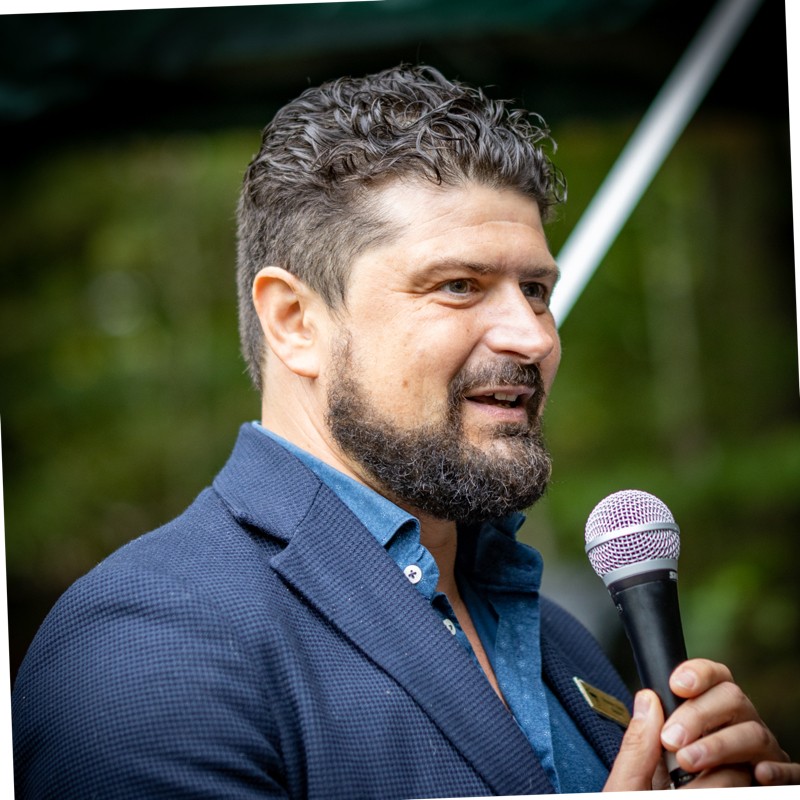
“It is clear from our side that nexus between food and climate has been getting a steady drumbeat of support, we would like to use our platform at COP28 to accelerate the food systems transformation discussion and the transition.”
Kristofer Hamel, COP28 UAE Climate Change Special Envoy
Conclusions from Good Food Finance Week
The GFFWeek showcased the finance sector’s power in shaping a sustainable, equitable, and resilient food system. The five-day virtual event provided a platform for collaboration among diverse stakeholders, including financial institutions, farmers, food producers and policymakers to discuss innovative financing models and strategies aimed at transforming the future of food and nutrition. This collaborative approach is crucial for addressing the complex challenges facing the food system and driving positive change, and outcomes of the event are set to have far-reaching implications for a more sustainable and inclusive food future, aligning with other progress in the sector. As Prof. Dr. Lotze-Campen mentioned during the Leaders dialogue,

“Changing long held ideas, broadly construed, through dialogue and persuasion, will also be key to building political support for the transition”.
Prof. Dr. Hermann Lotze-Campen, Head of Research Department 2 “Climate Resilience” at Potsdam Institute For Climate Impact Research
A central theme was the focus on social and environmental impact. Participants emphasized the importance of investing in projects that tackle nutrition insecurity, promote food justice, and mitigate climate change. By aligning financial resources with social and environmental values, participants recognized the need to go beyond profit-making and prioritize broader well-being and sustainability.
Some of the conclusions from the participants of the Good Food Finance Week:
- We need to see more coordination with the government and the commercial or the private side to really scale up private sector capital in the food system structure. We are going to need liquidity, we are a small niche within global capitalism, and we are going to need more people to make money with these investments, in order to attract more capital;
- Standardize the approach in agriculture in order to get to scale;
- We need to begin to build the relationships that are necessary to deploy the capital with more transparency, and we need government partnerships.
Looking ahead, the financial sector will continue to play a crucial role in shaping a better food future. Future focuses include the UAE COP28 food breakthrough agenda, leveraging opportunities in the India G20 and Brazil’s G20, and the UN Food Systems Coordination Hub Stocktaking Moment. The GFFN plans to partner for a side event on the role of private finance, recognizing that transformation cannot occur without adequate financing, as highlighted by Ambassador Ertharin Cousin, Co-Chair of the GFFN,

“Financing is the key term, because even with all the commitments, public will and policy, the transformation cannot occur without finance”.
Ertharin Cousin, CEO and Founder Food Systems for the Futur and Co-Chair of the GFFN
 Good Food Finance Network