

As the COP30 UN Climate Change Conference enters the closing days, many of the highest-value areas of climate-related investment and transformation remain largely untapped by the mainstream economy. While the negotiations in Belém, at the edge of the Amazon region, have advanced new initiatives for sharing science insights and investing in conservation, it is important that we not overlook theContinue reading “Agroecology to drive high-value sustainable development”
Tag Archives: Climate change
Good Food Finance partners shaping climate policy & financial innovation

GFFN Newsletter – Advancing nutrition-related investment standards; unlocking climate finance; COP30 priorities for finance, food, trade, and metrics; new Resilient Prosperity Forum to explore food finance questions. ATNi engages in the IFRS/ISSB consultation on amendments to the SASB standards A critical shift toward healthier product portfolios The food industry’s transition towards providing healthier foods for all is essentialContinue reading “Good Food Finance partners shaping climate policy & financial innovation”
ICJ climate opinion has implications for food finance

In 2023, the United Nations General Assembly formally asked the International Court of Justice (ICJ) to issue an advisory opinion on the obligations of states with regard to climate change, under international law. The request asked for legal findings on two core questions: On Wednesday, July 23, 2025, the ICJ issued its landmark Advisory Opinion on theContinue reading “ICJ climate opinion has implications for food finance”
Agrifood transformation can secure a livable climate & ocean future

In its flagship Recipe for a Livable Planet report, the World Bank found that Agrifood is a bigger contributor to climate change than many think. It generates almost a third of GHG emissions, averaging around 16 gigatons annually. This is about one-sixth more than all of the world’s heat and electricity emissions. This has several far-reaching practicalContinue reading “Agrifood transformation can secure a livable climate & ocean future”
City food finance principles to build Climate Value

Cities are increasingly important in the work of shaping human access to health and wellbeing. As more of the world’s population moves to cities, decisions that determine whether air and water are clean and safe, and how food is acquired and distributed in local economies, may determine how long people live and how free theyContinue reading “City food finance principles to build Climate Value”
Belém is an opportunity to avoid costly economic breakdown

The COP30 round of UN Climate Change negotiations in Belém, Brazil, offers many opportunities for expanding investment into climate action and its everyday benefits. In many ways, Belém provides a unique opportunity to take those benefits far beyond clmate priorities, to support improved conditions across whole economies. For a long time, one of the greatContinue reading “Belém is an opportunity to avoid costly economic breakdown”
Blueprint for data systems integration—tracking high-value co-benefits
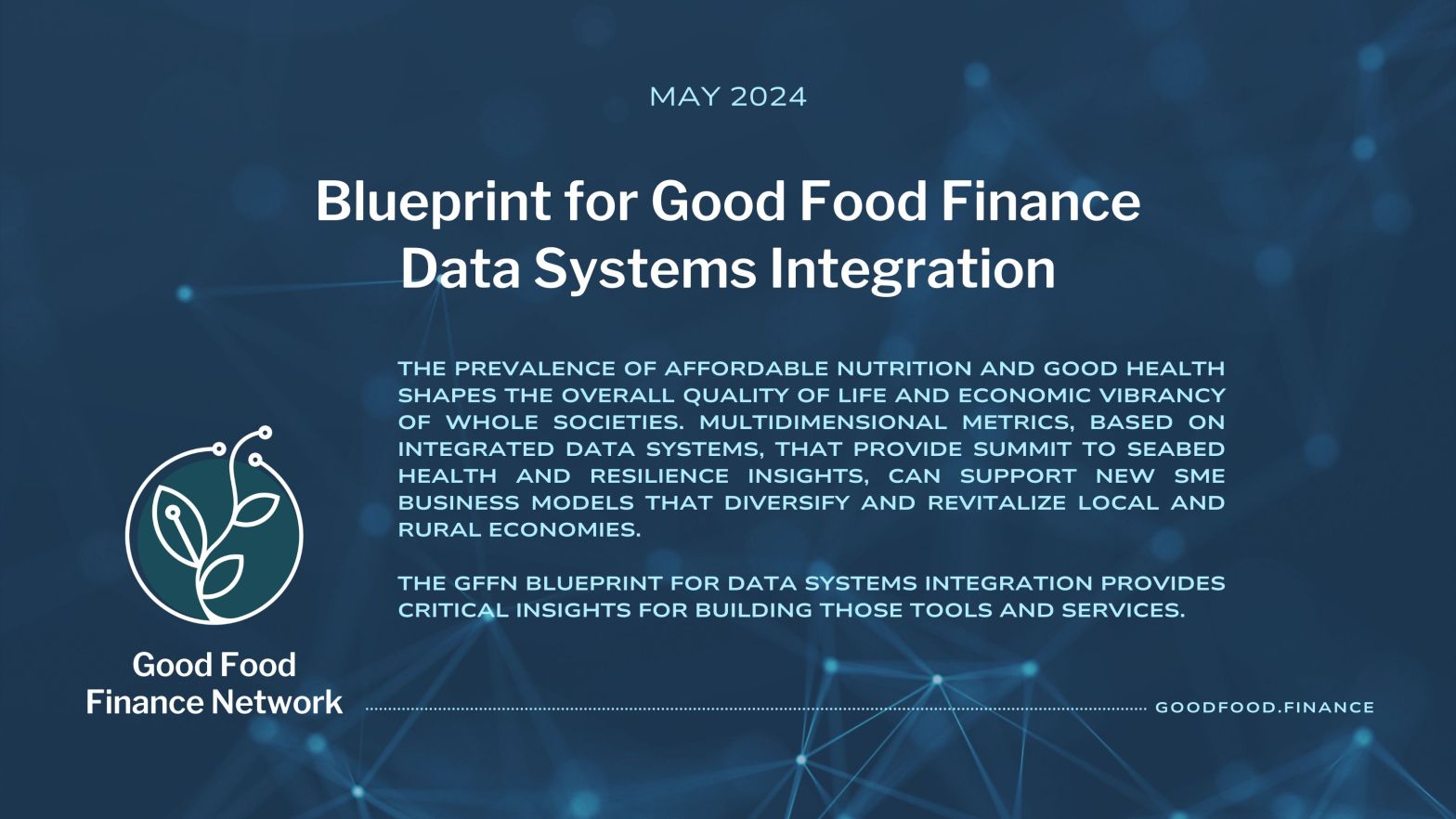
The Integrated Data Systems Initiative is a five-year innovation sprint, organized by the Good Food Finance Network (GFFN) and recognized by the 2023 Agriculture Innovation Mission (AIM) for Climate Summit. Today, the GFFN is releasing a ‘Blueprint for Good Food Finance Data Systems Integration’, which marks the culmination of Year 1 of that sprint. WhenContinue reading “Blueprint for data systems integration—tracking high-value co-benefits”
Cooperative innovation in energy, food, finance & trade can halt climate breakdown

Ahead of the Spring Meetings of the World Bank and International Monetary Fund, CCI is calling for a significant increase in multilateral climate cooperation, in line with Article 6.8 of the Paris Agreement. 32 years have passed since the community of nations formally agreed to “prevent dangerous anthropogenic interference with the climate system”. Since the Paris AgreementContinue reading “Cooperative innovation in energy, food, finance & trade can halt climate breakdown”
UNEP Emissions Gap Report 2022
According to the 2022 Emissions Gap Report, the international community is falling far short of meeting Paris goals, with no credible pathway to 1.5 degrees C in place.Transforming food systems is imperative for avoiding dangerous levels of climate change and other environmental problems. The report identifies a range of transformation domains with several mitigation measures where food systems can contribute to bridge the emissions gap.
Systemic solutions for climate change adaptation and mitigation in agriculture, nutrition and food systems

This Working Paper on Systemic Solutions for Climate Change Adaptation and Mitigation in Agriculture, Nutrition, and Food Systems explores three primary intervention categories that can be used as entry points for sustainable food systems
 Good Food Finance Network