
On Wednesday, March 26, 2025, CCI convened Part 1 of the Good Food Finance Network’s Data Systems Integration Forum. This virtual discussion forum focused on work needed to activate insights from the Good Food Finance Blueprint for Data Systems Integration, released last year. The aim of this interactive forum is to establish parameters for early and advanced stageContinue reading “Consider the human – Report from Part 1 of GFFN Data Systems Integration Forum”
Tag Archives: food security
City food finance principles to build Climate Value

Cities are increasingly important in the work of shaping human access to health and wellbeing. As more of the world’s population moves to cities, decisions that determine whether air and water are clean and safe, and how food is acquired and distributed in local economies, may determine how long people live and how free theyContinue reading “City food finance principles to build Climate Value”
Make trade work for everyone

Climate value must be built into all decisions on trade By Steve Valk As the world strives to meet the challenge of reducing greenhouse gas emissions enough to keep the increase in temperature from exceeding the 1.5°C threshold, international trade has the potential to be the driver of best-case outcomes for people and for theContinue reading “Make trade work for everyone”
Blueprint for data systems integration—tracking high-value co-benefits
The Integrated Data Systems Initiative is a five-year innovation sprint, organized by the Good Food Finance Network (GFFN) and recognized by the 2023 Agriculture Innovation Mission (AIM) for Climate Summit. Today, the GFFN is releasing a ‘Blueprint for Good Food Finance Data Systems Integration’, which marks the culmination of Year 1 of that sprint. WhenContinue reading “Blueprint for data systems integration—tracking high-value co-benefits”
The State of Food Security and Nutrition in the World 2023
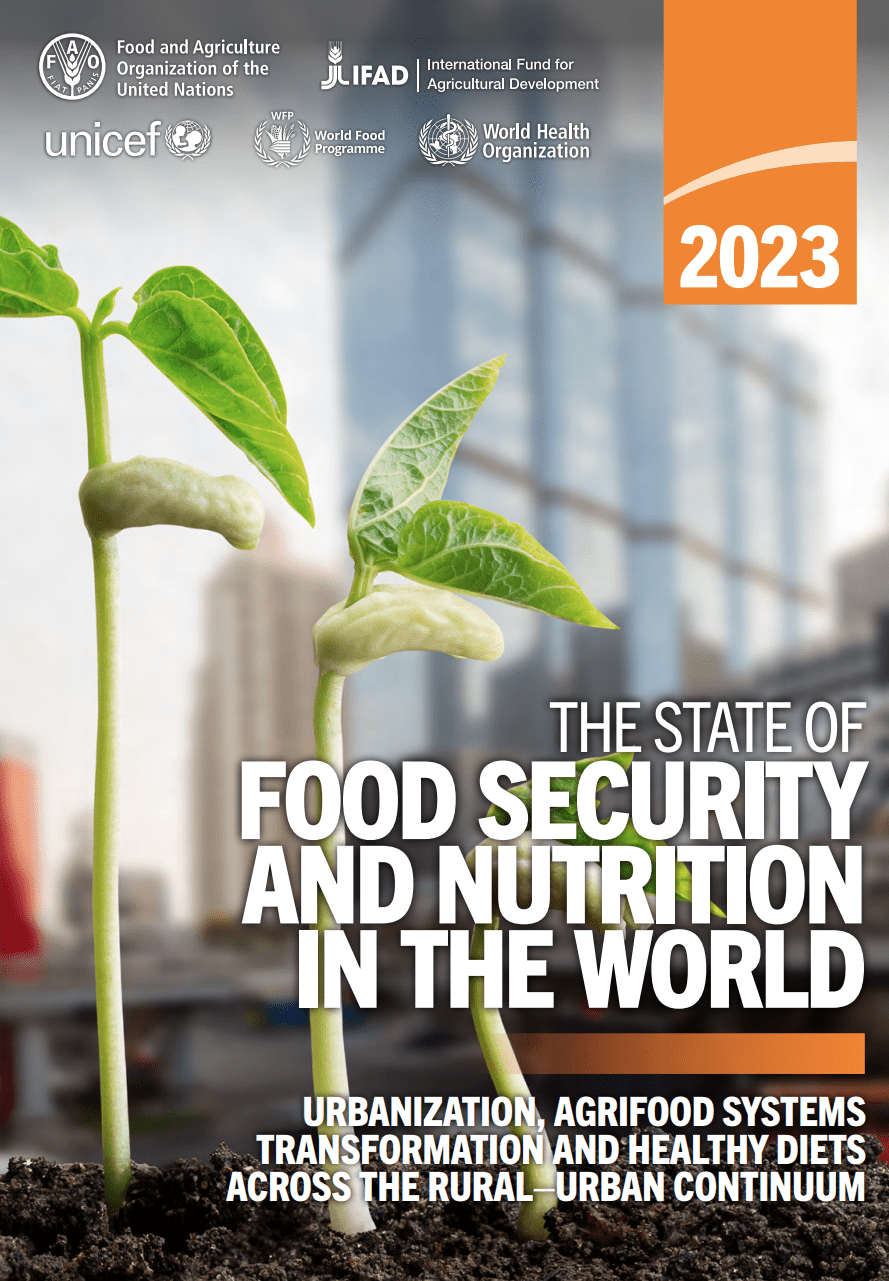
This annual FAO report provides an update on global progress towards the targets of ending hunger (SDG Target 2.1) and all forms of malnutrition (SDG Target 2.2) and estimates on the number of people who are unable to afford a healthy diet.
EAT-Lancet Commission 2.0: securing a just transition to healthy, environmentally sustainable diets for all

GFFN Founding Partner EAT Forum, in their EAT-Lancet’s 2.0 Commission, examines the latest evidence to define and quantify a healthy reference diet within the limits of our planet that is accessible to all – Read the full commentary
Good Food System Transition: Repurposing agricultural support to promote fiscal resilience, human and planetary health

There are opportunities for institutional investors and policymakers to work together on the agenda of repurposing agricultural support and on agricultural policies. This can inform win-win policies that can better support human health, help stabilize the climate, as well as enhance businesses’ productivity and preserve the ecosystems on which food production depends.
The future of food and agriculture: Drivers and triggers for transformation

The fundamental message of this report is that it is still possible to push agrifood systems along a pattern of sustainability and resilience, if key “triggers” of transformation are properly activated. However, strategic policy options to activate them will have to “outsmart” vested interests, hidden agendas and conflicting objectives, and trade off short-term unsustainable achievements for longer-term sustainability, resilience and inclusivity.
Food and Agriculture for Sustainable Transformation Initiative (FAST)

The FAST initiative will be a multi-stakeholder partnership acting as an accelerator to transform agrifood systems to deliver triple wins: for people, for climate and for nature.
FAST is designed as a catalyst, building on ongoing global and regional initiatives and coalitions to drive effective actions, and avoiding duplication.
Sustainable Rice Landscapes Initiative report

This report explores the opportunities, needs and requirements to leverage private sector investment in sustainable rice landscapes. By improving the flow of capital into rice production, the private sector can help lower interest rates for new equipment, extend access to early warning systems, reduce food loss and improve access to climate-resilient seeds. This report was launched during the GFFN press conference and is a really concrete example of innovative and collaborative approaches to finance sustainable food systems.
 Good Food Finance Network