
This report provides options and a vision to guide global food systems to achieving net-zero by 2050.
Tag Archives: Framework
Common success factors for bankable nature-based solutions

Report outlining case studies that demonstrate bankable projects, case studies look at sustainable agriculture and commodity chain development for sustainable cocoa production, forest resilience, marine protected areas, mangroves, and sustainable agroforestry. These case studies can be referenced to better understand how and why initiatives are bankable and successful
Stockholm +50 – A new step toward food value chain transformation

GFFN Partner World Business Council for Sustainable Development (WBCSD) and Stokholm Environmental Institute (SEI), in close collaboration with GFFN Partner United Nations Environment Programme (UNEP) launched the Stockholm Action Agenda initiative, outlining priorities and recommendations for action in key sectors, including food and agriculture.
Scaling up finance for sustainable food systems through blended finance: six catalytic actions

The Discussion paper from the CGIAR Research Program on Climate Change, Agriculture, and Food Security (CCAFS) presents a snapshot of current challenges and opportunities associated with blended finance and calls for a radical sectoral shift in agriculture, using commercial banks, development finance institutions and other financial intermediaries as enablers for food systems transformation. It provides a situation analysis and a proposed action plan that was discussed in-depth during the GFFN Event ‘Strengthening collaboration between private and public banks to scale up finance for sustainable food systems”.
‘Food Finance Architecture: Financing a Healthy, Equitable and Sustainable Food System’ report launched at UN Summit
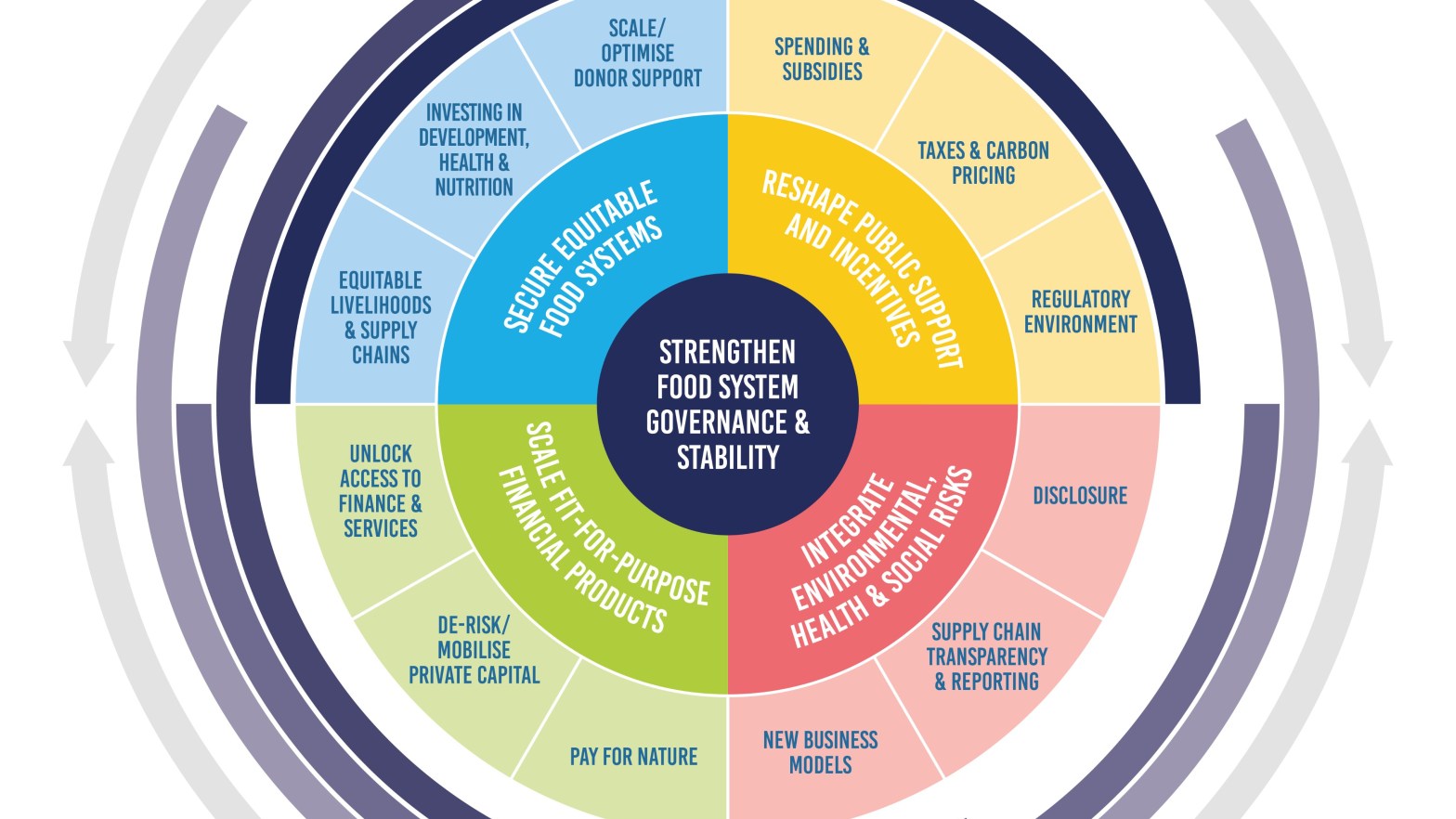
The United Nations Food Systems Summit launched the ‘Food Finance Architecture’ publication and policy brief, outlining the building blocks for how banks, investors, development institutions, companies, farmers, and governments can shift capital out of high-carbon, unequal, extractive food assets and into inclusive, climate-smart, circular business models that benefit the people and planet.
A Multi-Billion-Dollar Opportunity: Repurposing agricultural support to transform food systems
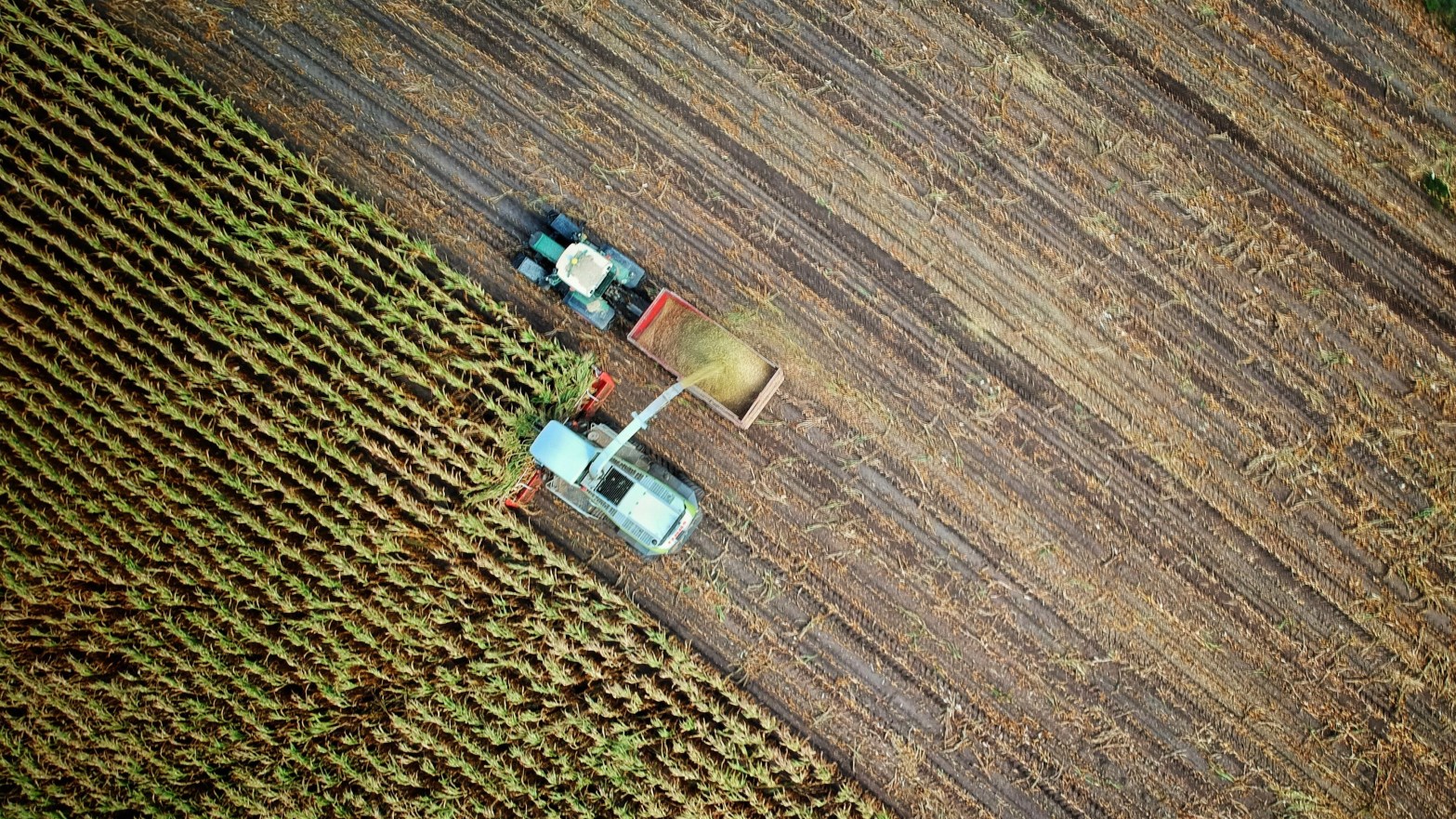
This joint FAO-UNDP-UNEP report calls for governments to rethink the way agriculture is subsidized and supported. The majority (87%) of $540 billion of support to agricultural producers is either price distorting or harmful to nature and health. Repurposing this support can help transform food systems and achieve the SDGs.
The State of Finance for Nature Report

The State of Finance of Nature tracks global trends in public and private investment in nature-based solutions, aiming to improve data quality and identify opportunities for governments, businesses and financiers. This year’s report calls for investments in nature-based solutions to triple by 2030 and to increase four-fold by 2050 from the current level. While an increase in public funding would help plug some of the gap, there needs to be a significant increase in private sector investment in Nature-based solutions.
‘Healthy Diets from Sustainable Food Systems: Food, Planet Health’ EAT – Lancet Commission Summary Report
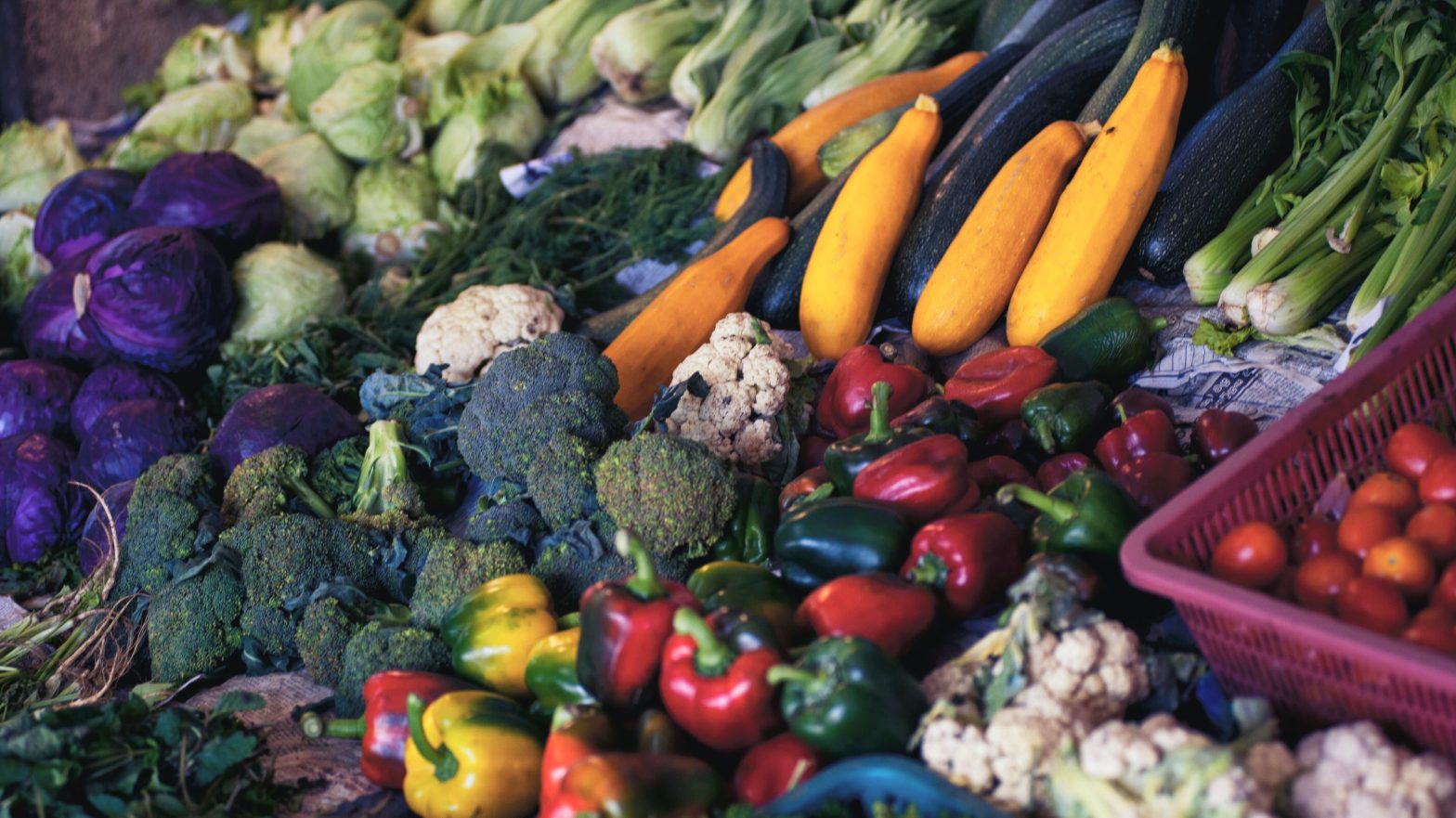
The EAT-Lancet report is the first full scientific review of what constitutes a healthy diet from a sustainable food system, and which actions can support and speed up food system transformation.
Growing Better report: Ten Critical Transitions to Transform Food and Land Use
The Food and Land Use Coalition (FOLU) report ‘Growing Better: Ten Critical Transitions to Transform Food and Land Use’ details critical steps for transforming food systems and achieving a future of sustainable land use. It found food systems generate $12 trillion per year in “hidden” environmental, health and poverty costs, leaving us with net costs of $2 trillion per year, globally.
 Good Food Finance Network