Conference of the parties to the convention on biological diversity, fifteenth meeting – part II. This document outlines a set of actions and targets to conserve and sustainably use the world’s biodiversity, including those related to food and agriculture.
Author Archives: GFFN Secretariat
The future of food and agriculture: Drivers and triggers for transformation

The fundamental message of this report is that it is still possible to push agrifood systems along a pattern of sustainability and resilience, if key “triggers” of transformation are properly activated. However, strategic policy options to activate them will have to “outsmart” vested interests, hidden agendas and conflicting objectives, and trade off short-term unsustainable achievements for longer-term sustainability, resilience and inclusivity.
Evaluation of the EU support to sustainable agri-food systems in partner countries 2014-2020

This thematic evaluation assesses the performance of EU support to food and nutrition security, sustainable agriculture and fisheries at country, regional and global level over the period 2014-2020.
State of Finance for Nature 2022

By 2025, annual investment in Nature based solutions (NbS) needs to increase to US $384 billion, more than double the finance currently flowing into NbS (US $154 billion) according to the State of Finance for Nature 2022 report, published by GFFN Partner – UN Environment Programme, and Economics of Land Degradation (ELD) Initiative.
Food and Agriculture for Sustainable Transformation Initiative (FAST)

The FAST initiative will be a multi-stakeholder partnership acting as an accelerator to transform agrifood systems to deliver triple wins: for people, for climate and for nature.
FAST is designed as a catalyst, building on ongoing global and regional initiatives and coalitions to drive effective actions, and avoiding duplication.
Sustainable Rice Landscapes Initiative report

This report explores the opportunities, needs and requirements to leverage private sector investment in sustainable rice landscapes. By improving the flow of capital into rice production, the private sector can help lower interest rates for new equipment, extend access to early warning systems, reduce food loss and improve access to climate-resilient seeds. This report was launched during the GFFN press conference and is a really concrete example of innovative and collaborative approaches to finance sustainable food systems.
COP27 Announcement: Co-Investment Platform for Food Systems Transformation under development
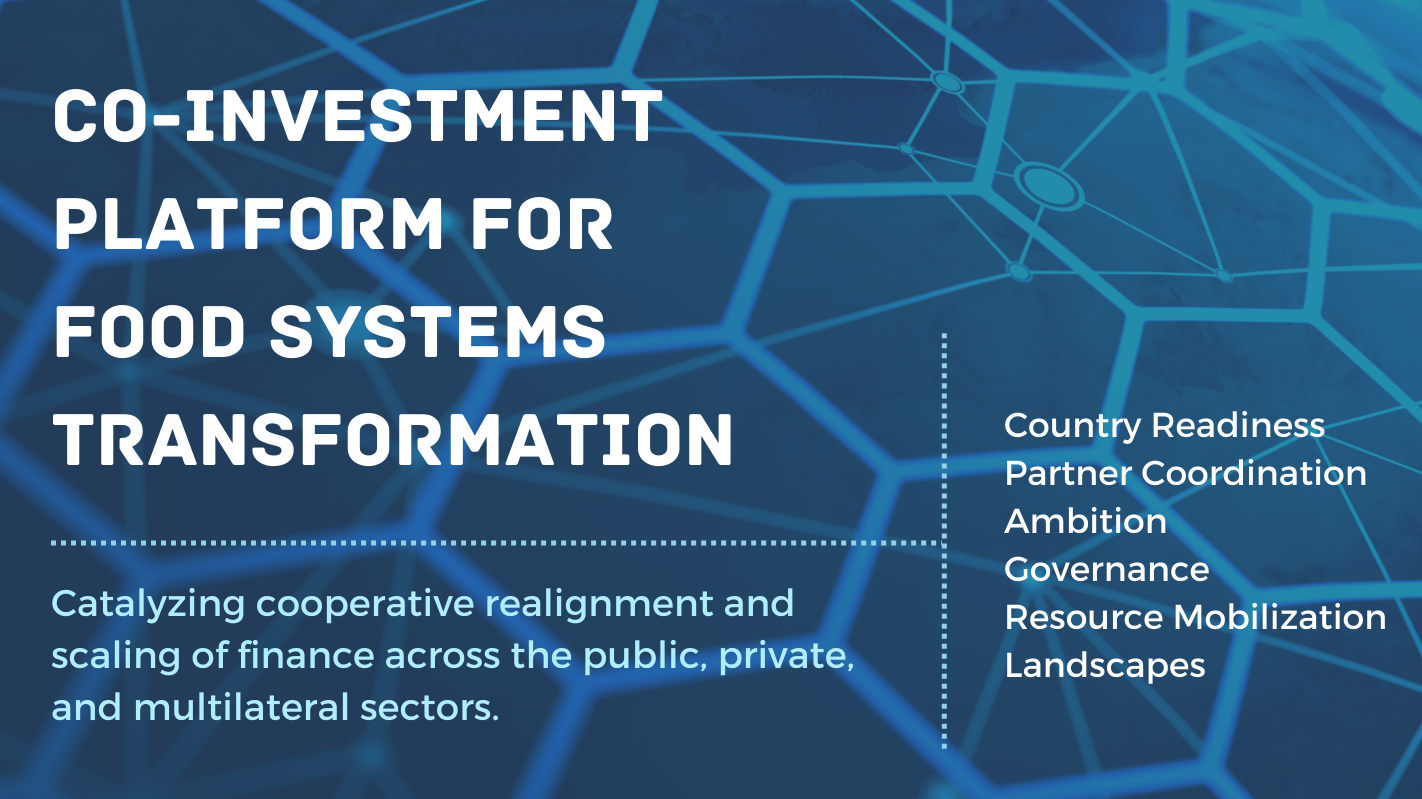
The Good Food Finance Network is working to create a Co-Investment Platform for Food Systems Transformation (CIP) across multilateral, public, private and philanthropic finance, to urgently crowd in and scale climate-smart investments into food systems. Multiple interconnected crises are creating an unprecedented global food security emergency. Ongoing degradation of ecosystems, watersheds, and productive capacity, muchContinue reading “COP27 Announcement: Co-Investment Platform for Food Systems Transformation under development”
GFFN Press Conference: Good Food Finance for Climate Action
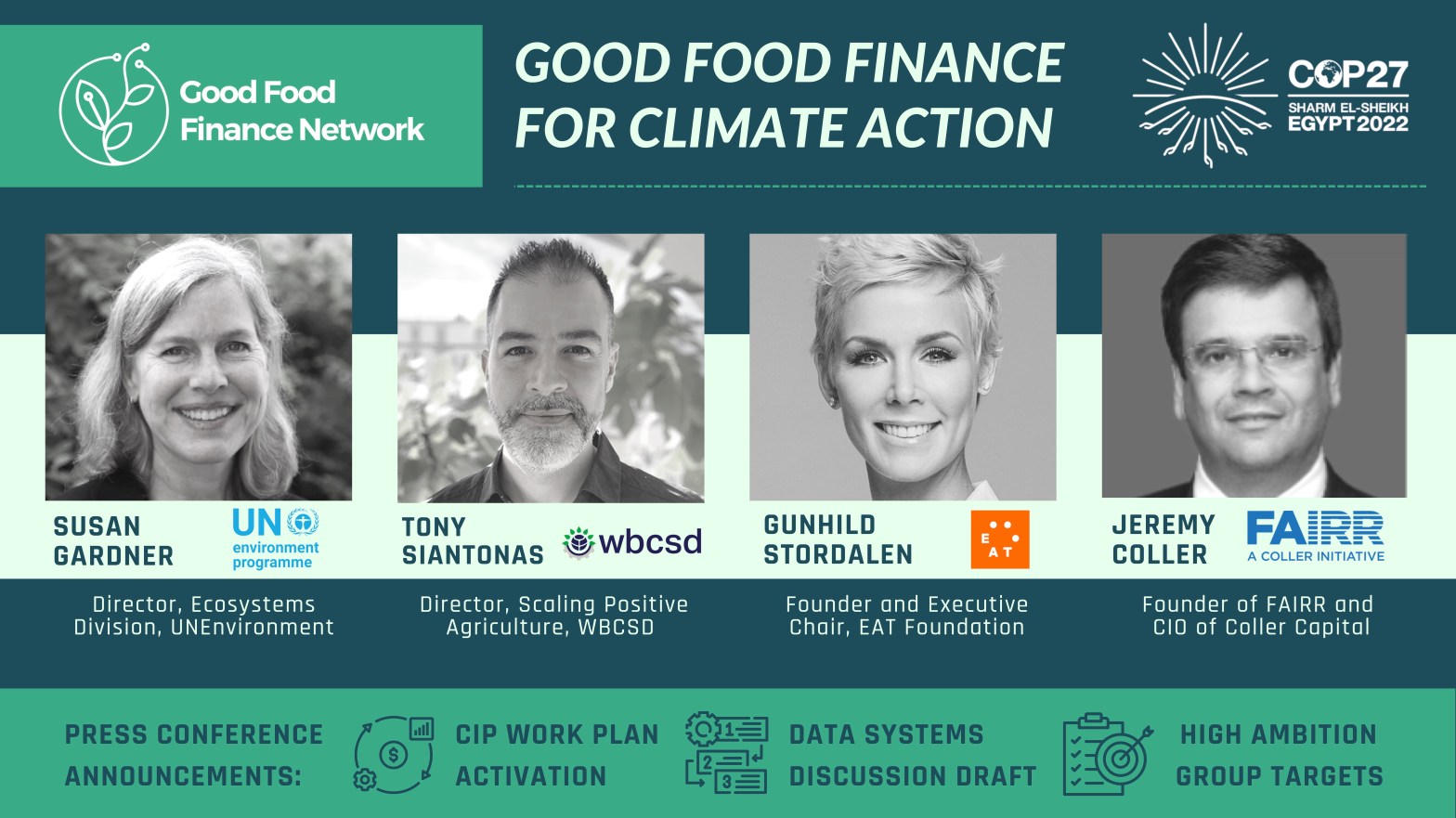
On 11 November 2022 and during the first week of the UNFCCC COP27, the Good Food Finance Network hosted a Press Conference highlighting how good food finance has a crucial role in meeting the Paris Agreement and wider Sustainable Development Goals. With the presence of GFFN Principals and representatives in attendance, the announcements showed howContinue reading “GFFN Press Conference: Good Food Finance for Climate Action”
Investing in sustainable food systems: A methodology and lessons learned from Africa

This briefing note presents a five-step methodology to stimulate sustainable investments in agri-food systems and outlines six lessons learned from its application – Africa focus
Integrity Matters: Net zero commitments by businesses, financial institutions, cities and regions

The report provides clarity in four key areas – environmental integrity, credibility, accountability and the role of governments. The 10 recommendations outlined in the report detail what non-state actors need to consider through each stage of their progress towards achieving net-zero ambitions and addressing the climate crisis.
 Good Food Finance Network