

According to the 2022 Emissions Gap Report, the international community is falling far short of meeting Paris goals, with no credible pathway to 1.5 degrees C in place.Transforming food systems is imperative for avoiding dangerous levels of climate change and other environmental problems. The report identifies a range of transformation domains with several mitigation measures where food systems can contribute to bridge the emissions gap.
Tag Archives: finance
Finance leaders publish new generation of ‘high ambition’ targets for the sustainable food transition

UN-supported group urges wider finance sector to ‘supersize its ambition’ (Geneva, 27/10/22) The Good Food Finance Network’s High Ambition Group, a group of 11 influential institutions in food and finance, today unveiled a first tranche of environmental and social impact targets covering over US$108 billion of existing assets. The UN Environment Programme (UNEP) praised the targets and called onContinue reading “Finance leaders publish new generation of ‘high ambition’ targets for the sustainable food transition”
Systemic solutions for climate change adaptation and mitigation in agriculture, nutrition and food systems

This Working Paper on Systemic Solutions for Climate Change Adaptation and Mitigation in Agriculture, Nutrition, and Food Systems explores three primary intervention categories that can be used as entry points for sustainable food systems
Trade and Development Report 2022 UNCTAD

UNCTAD The report warns that monetary and fiscal policy moves in advanced economies risk pushing the world towards global recession and prolonged stagnation, inflicting worse damage than the financial crisis in 2008 and the COVID-19 shock in 2020.
Bringing good food finance on the Climate Agenda at Climate Week NYC

A year after the launch of the Good Food Finance Network (GFFN), the GFFN principals and co-chairs met businesses and investors during Climate Week NYC 2022 to demonstrate the progress made and invite them to join the network to unlock finance for sustainable and climate-resilient food systems. “Financial institutions, be it asset managers, commercial banksContinue reading “Bringing good food finance on the Climate Agenda at Climate Week NYC”
Common success factors for bankable nature-based solutions

Report outlining case studies that demonstrate bankable projects, case studies look at sustainable agriculture and commodity chain development for sustainable cocoa production, forest resilience, marine protected areas, mangroves, and sustainable agroforestry. These case studies can be referenced to better understand how and why initiatives are bankable and successful
Bonn climate talks signal need for good food finance

Discussions at the 2022 Bonn Climate Change Conference (SB56) illustrate that climate-aligned food-related finance is becoming a priority for local communities, national governments, and international cooperation.
Food System Transformation in Turbulent Times – Interview with GFFN Partners WBCSD and Food Systems for the Future
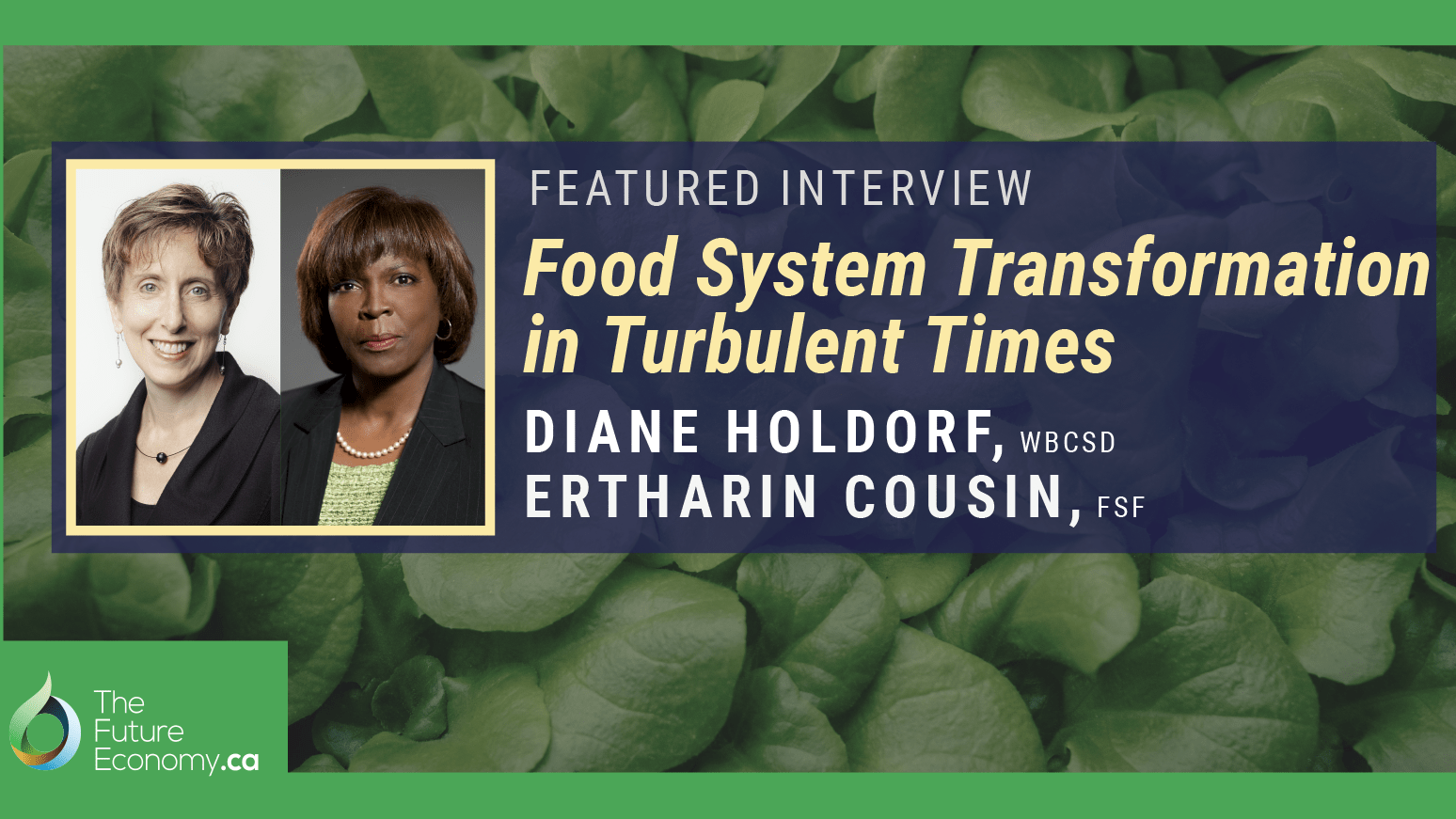
Expert Interview featuring GFFN Principals & core partners Diane Holdorf – Executive Vice President at World Business Council for Sustainable Development (WBCSD) & Ertharin Cousin – CEO and Founder of Food Systems for the Future (FSF) discuss the urgen need for a fast response to food systems transformations and the importance of adequate and accessible financing.
Tracking progress on food and agriculture-related SDG indicators 2022

FAO’s new report, “Tracking progress on food and agriculture-related SDG indicators”, offers analysis and trends on indicators across eight SDGs (1, 2, 5, 6, 10, 12, 14 and 15), highlighting areas of progress and areas where further effort is needed. This edition also includes a snapshot on conflict, COVID-19 and food insecurity, as well as a special chapter on measuring productive and sustainable agriculture, with progress toward SDG Target 2.4 analysed for the first time.
State of Finance for Nature in the G20 Report

The State of Finance for Nature in the G20 report attempts to capture the complete amount and future need for G20 country spending on nature-based solutions assets and activities. It reveals that current G20 investments in nature-based solutions are insufficient, at USD 120 billion/year, and G20 Official Development Assistance and private sector investments are small when compared with domestic government spending. It builds on the global report ‘State of Finance for Nature – Tripling Investments in Nature-Based Solutions by 2030’ released in 2021, which calls for closing a USD 4.1 trillion financing gap in nature-based solutions.
 Good Food Finance Network